


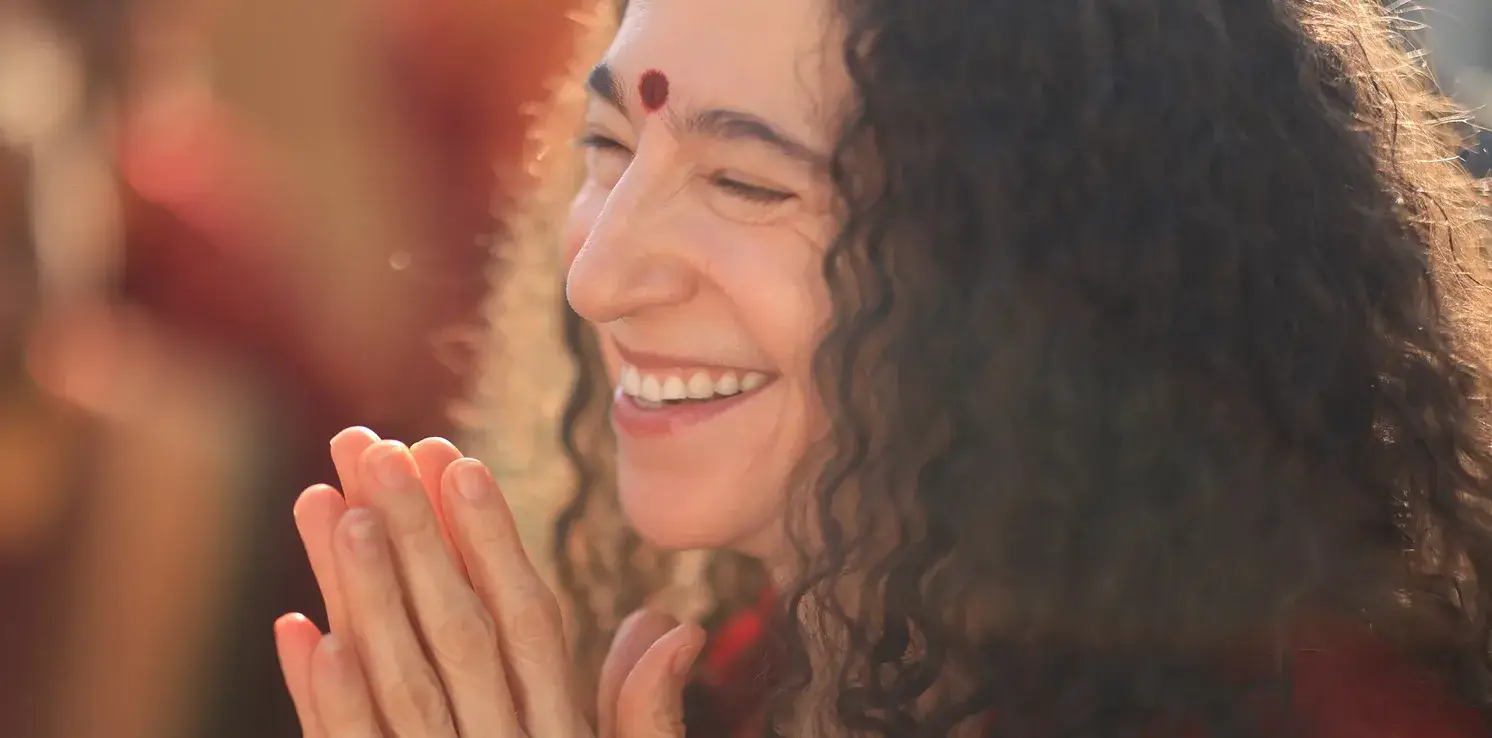
Sadhvi Bhagawati Saraswati: Life Story
Sadhvi Bhagawati Saraswati: Life Story
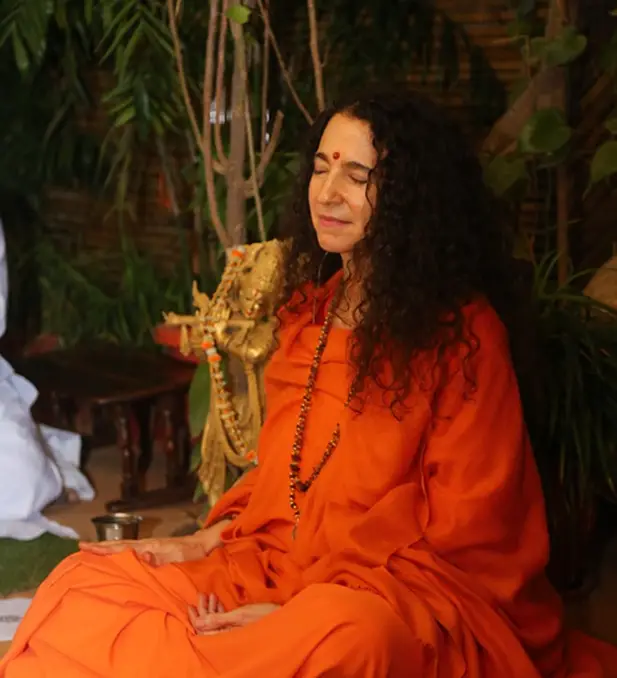
Sadhvi Bhagawati Saraswati, known as Sadhviji, is a global spiritual leader whose life bridges Hollywood and the Himalayas, psychology and spirituality, science and the sacred. Raised in Los Angeles and educated at Stanford University, she left behind a life of outward success to follow a deeper calling—one that led her to profound healing and transformation on the banks of the Ganga River in Rishikesh, India.
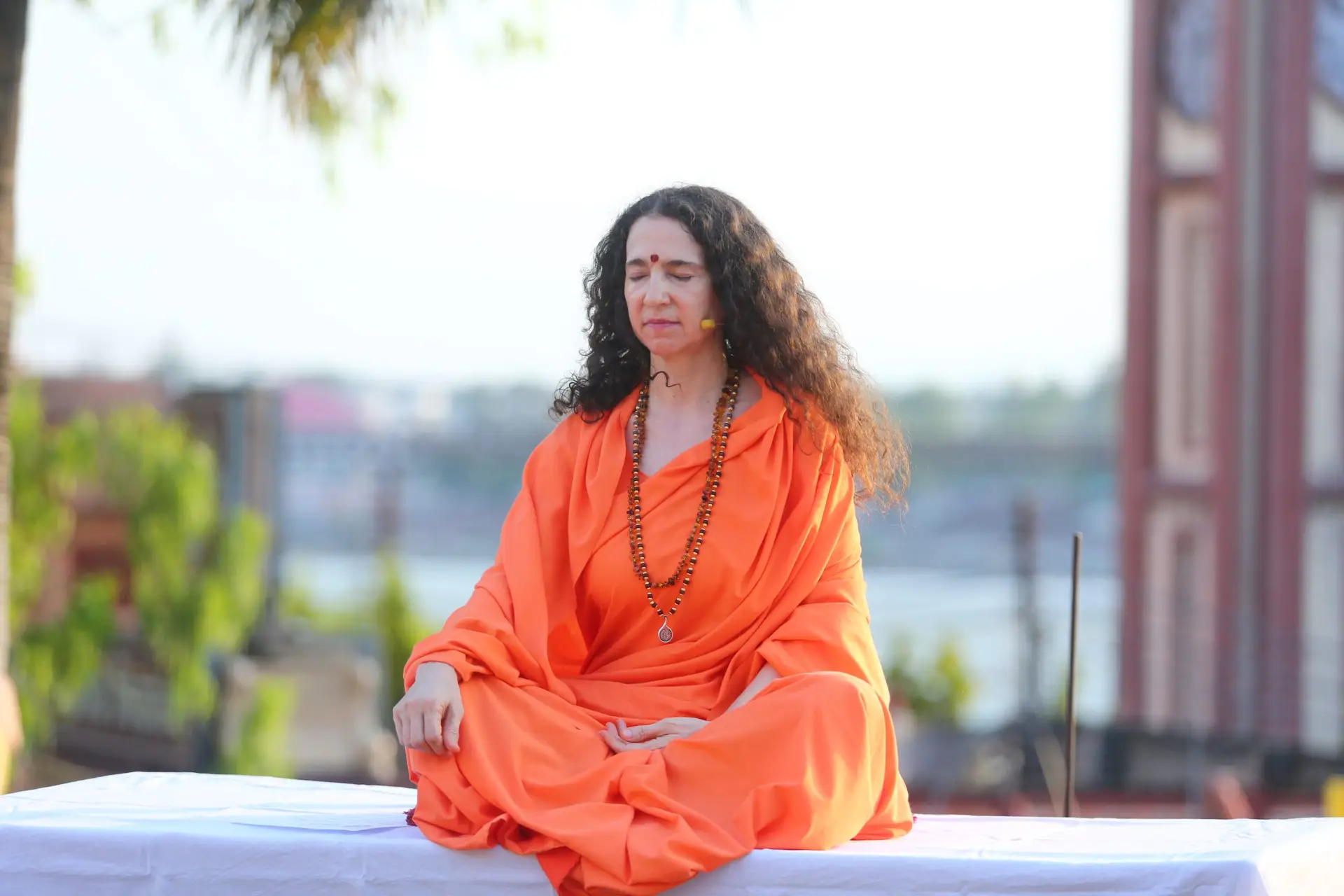
Childhood in Hollywood
Sadhvi Bhagawati Saraswati grew up in Studio City, California, just up the hill from Universal Studios, in what she calls “the coveted world of Hollywood.” She attended a private prep school alongside the children of actors, directors, and producers, and even auditioned for commercials as a child, with a full set of headshots. It was a childhood of abundance. And it was also marked by challenge, suffering and trauma that planted deep roots of pain and disconnection, and set her on a path in search of healing, meaning, and wholeness.
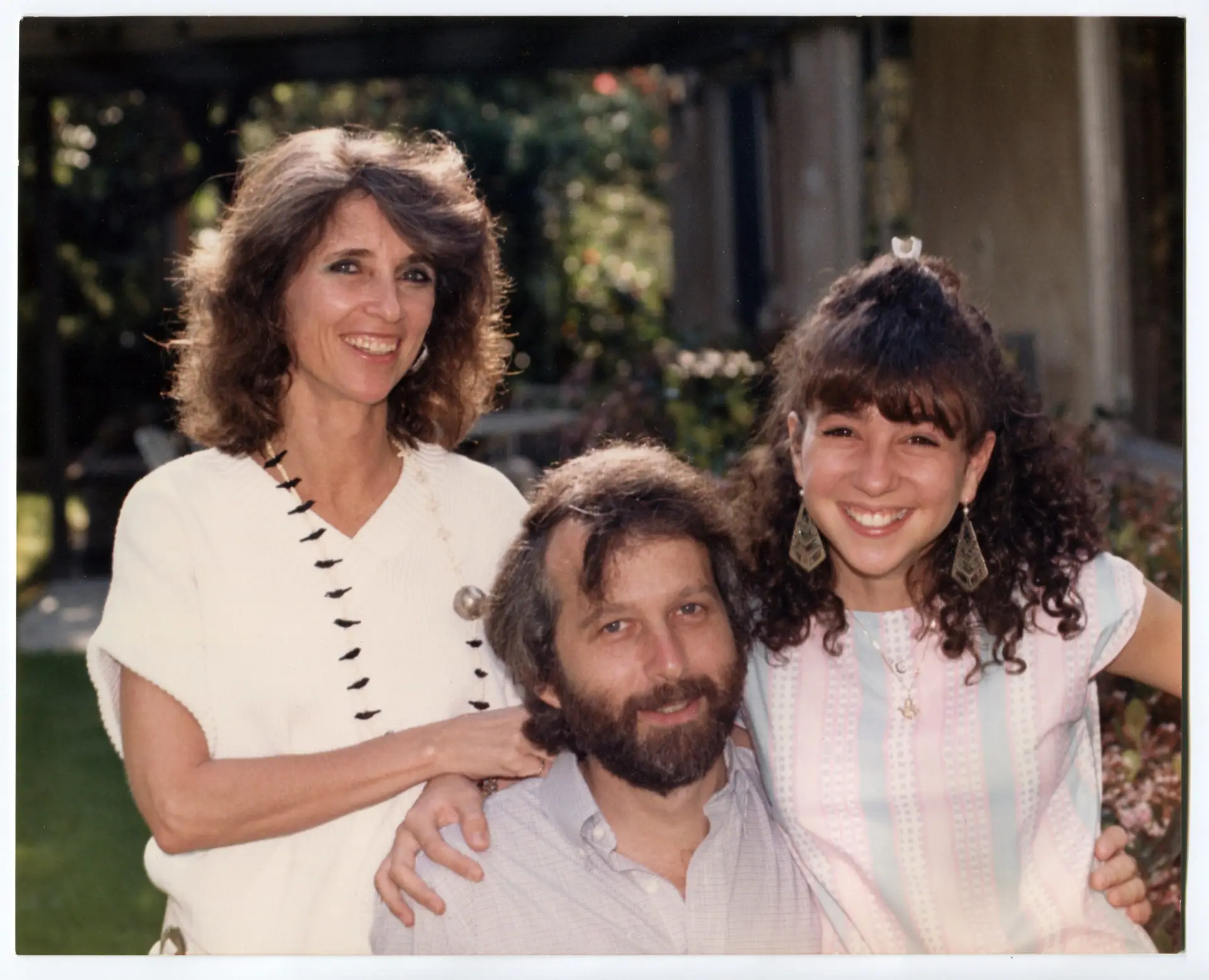
Struggles and Search for Healing
By the summer after her first year at Stanford, she was nineteen, bulimic, and signing her own discharge papers from an in-patient eating disorder unit after less than a week. The head of the unit warned, “You’ll come crawling back.” She knew she wouldn’t — but also knew she was in deep trouble. Over the next six years, she threw herself into healing: daily or weekly therapy sessions, Prozac and Zoloft, dream journaling, and hitting baseball bats into pillows until her arms felt like noodles, envisioning her father. She went to Overeaters Anonymous for a time, but joked that surrendering to a higher power just gave her an excuse: “My higher power was taking a nap and didn’t come through for me.” She kept her life “on the OK side of pathology by a tightly wound coil of restriction and control” — getting straight A’s in her PhD program, dating, marrying Jim, and managing relapses without sliding back into “the hell of self-loathing.” She still cried easily — in yoga class during shavasana, at movies, even at AT&T commercials — but she had convinced herself that was normal.
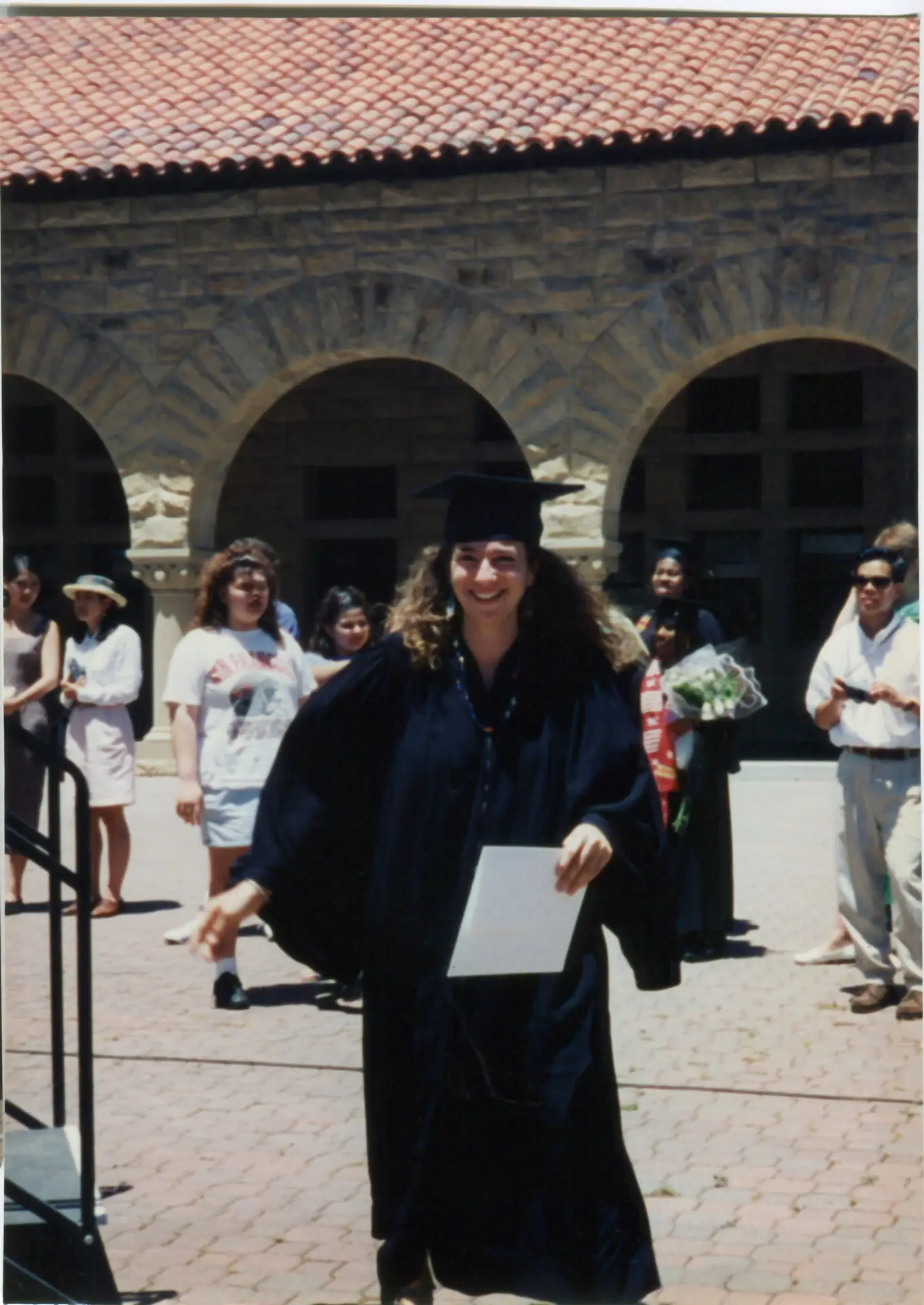
Marriage and Life Abroad
After graduating from Stanford, she and Jim moved to Ecuador for a year to teach English — an adventure and a gift, since he’d delayed joining the Peace Corps to wait for her. Teaching came easily to her, with lesson plans drafted on the bus in the morning. But afternoons were long, and she found her way to the local state-run children’s hospital, volunteering in the burn unit. The conditions were shocking: babies in overflowing diapers screaming while nurses watched soap operas, children burned by exploding gas canisters or vats of boiling water, many dying overnight from rampant infections. She barely spoke Spanish, but she could hold them, rock them to sleep, and be with them. It was heartbreaking work, but it deepened her awareness of suffering — and the need for simple, human presence.
How to Pronounce Her Name
Sadhvi Bhagawati Saraswati is pronounced Sod-vee Bog-uh-wah-tee Sar-ruh-swat-ee. “Sadhvi” is the feminine form of Swami, a title given to one who has taken vows of sanyas—a path of renunciation in service to humanity. She is affectionately known by her students and community as Sadhviji (Sod-vee-jee). The addition of “ji” at the end is a traditional Indian honorific used to convey respect.
Reluctant Journey to India
In 1996, Jim said, “We have to go to India.” Her first thought was not of temples or the Himalayas, but of food. A vegetarian since age fifteen, she loved Indian restaurants because she didn’t have to interrogate the waiter about stealth chicken stock, beef bouillon, or oyster sauce in her meal. “Indians understood vegetarianism,” she writes — no hidden meat, and no eggs in the pasta or naan. But beyond that, she had no pull to India. Still, they planned a three-month trip before she was due back in class. She didn’t know it yet, but something in her life was about to end—and something entirely new begin.
Awakening on the Banks of the Ganga
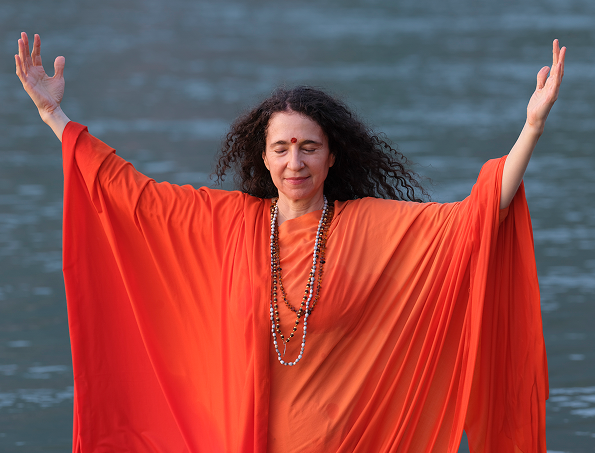
Shortly after arriving in Rishikesh, Sadhviji walked down to the banks of the Ganga River, intending simply to put her feet in the water. She was not seeking enlightenment or spiritual awakening. In fact, she did not consider herself religious or even particularly spiritual. Standing on the marble steps beside the rushing river, something unexpected happened. She experienced what she later described as a profound encounter with the Divine. It felt as though a veil had been lifted from every way she had known herself and the world. The Divine was no longer something separate or distant, but present in everything — in the river, the mountains, the people around her, and within herself. For the first time in her life, she experienced herself as whole, infinite, and one with all of existence. As tears streamed down her face, she found herself repeating, “Oh my God, it’s so beautiful.” They were not tears of sadness or happiness, but what she calls “tears of truth” — tears of coming home. Home not to a place, but to her deepest Self.
That experience on the banks of Mother Ganga changed the course of her life forever. What she received there was more real than anything she had experienced in her first twenty-five years. There was no turning back.
Meeting Pujya Swamiji
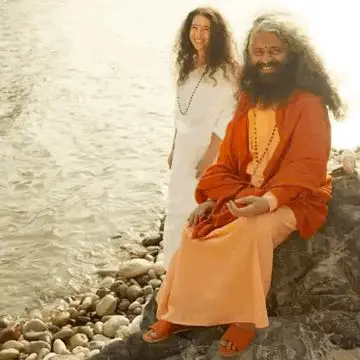
Soon after arriving in Rishikesh, she met H.H. Pujya Swami Chidanand Saraswatiji at Parmarth Niketan Ashram. In that first darshan, he looked into her with a love so vast it seemed to permeate every cell of her being. When she told him about her fear, her anxiety, her abuse, her eating disorder, he listened without judgment and then said, “You are waiting for someone to come and say, ‘Now you are done.’ No one will do that. You must draw the line yourself… You can carry this pain to your grave, or you can give it up tonight.”
Healing and Transformation
That evening, during the sacred sunset aarti, Pujya Swamiji instructed Sadhviji to take an oil lamp, wave it, and then “give all your pain to Ganga.” Part of her wanted to dismiss it as nonsensical — but she had promised herself she would keep her heart open in India, or leave. She stepped calf-deep into the moonlit river, cupped its water in her hands, and one by one released the people, memories, wounds, and stories that had shaped her suffering. “Take the pain,” she prayed, pouring the water back into the river. In the weeks and months that followed, the memories remained, but they no longer held power over her. She could no longer split into pieces. She was whole.
Commitment to Service in India
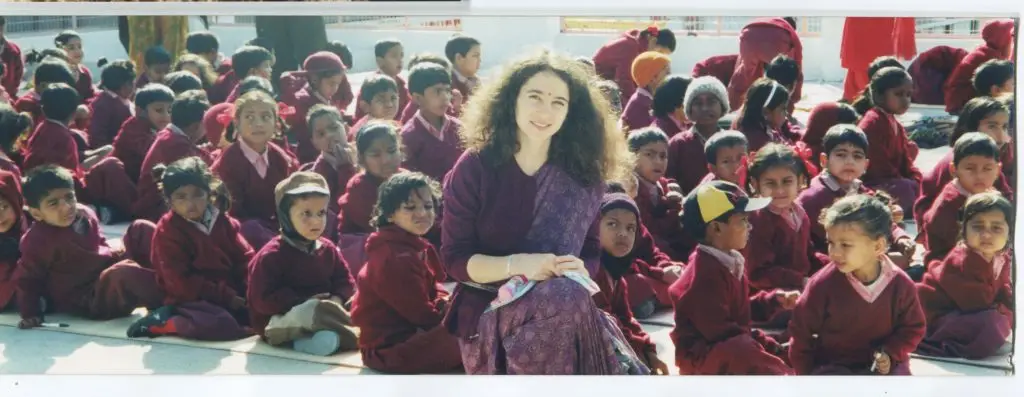
Sadhviji told herself she was taking a “year off” from graduate school, but part of her knew she would not be returning. The ashram was home. Mother Ganga, previously known to her only as “the Ganges,” was now her refuge. Under Pujya Swamiji’s guidance, she immersed herself in seva — selfless service. She fondly remembers never being happier than when she was fully in service.
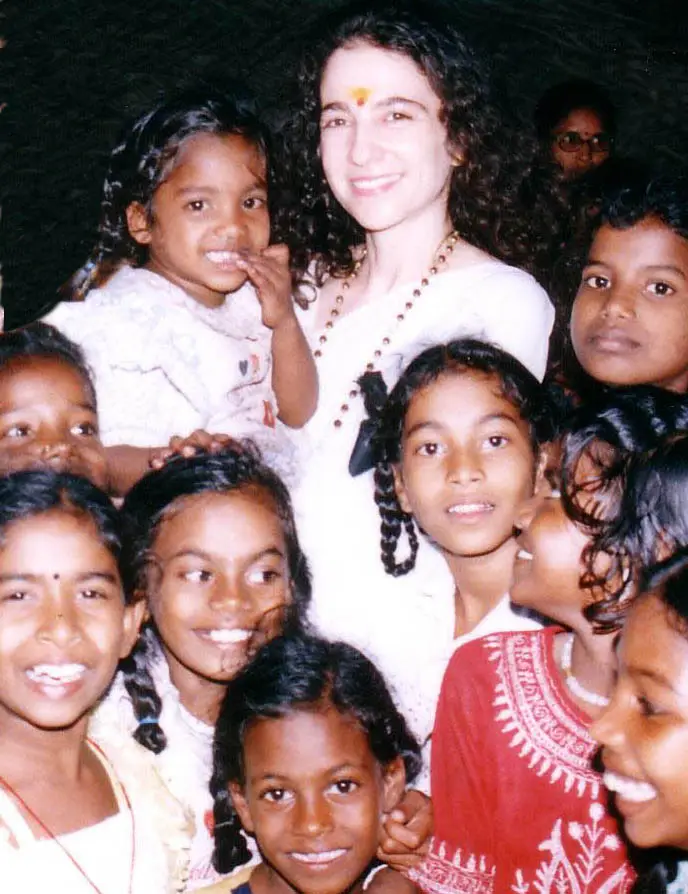
Her earliest seva focused primarily on women’s empowerment and education. She helped develop programs for disadvantaged women and girls, supported educational initiatives for impoverished children, and worked to ensure that vulnerable communities had access not only to basic necessities, but also to the values, dignity, and opportunities needed to thrive.
As devastating natural disasters struck the region and beyond, her service expanded into humanitarian relief efforts. Beginning with the 2004 South Indian tsunami and continuing through earthquakes, floods, and other crises, she helped coordinate and deliver both immediate humanitarian assistance and long-term rebuilding efforts — including schools, vocational training centres, medical services, and community development initiatives.
What had begun as her own search for healing had become the foundation for an entirely new life: one devoted to serving others.
Taking Sanyas
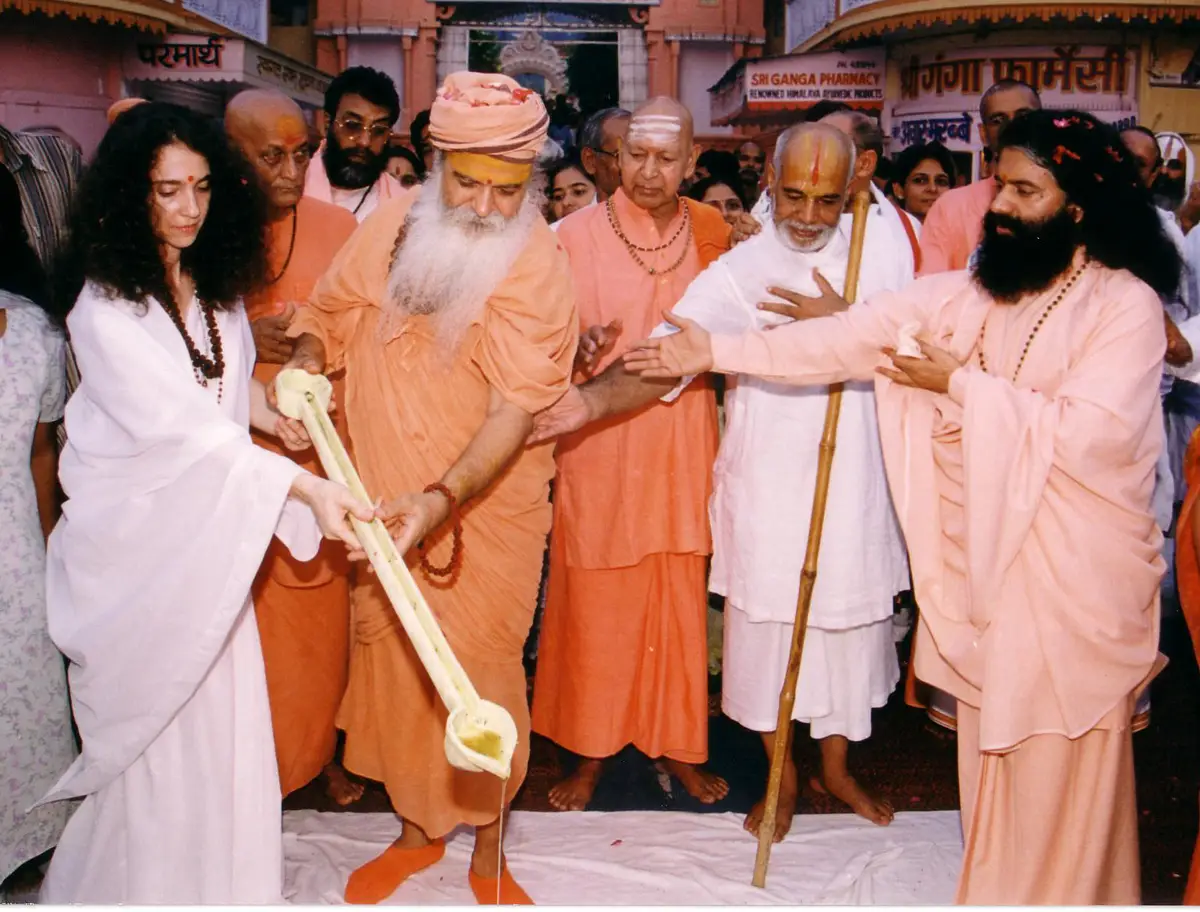
Four years into her life at Parmarth Niketan, Sadhviji made the decision to take sanyas — the formal vow of monastic renunciation in the Hindu tradition. It was not a rejection of life, but a relinquishing of the personal identity, attachments, and ambitions that had once defined her. She renounced her name, her possessions, and the pull of worldly achievement, stepping fully into a life devoted to service, spiritual practice, and the welfare of all beings.
On the day of her initiation, Pujya Swami Chidanand Saraswatiji placed around her shoulders the sacred saffron robes. He explained that saffron is the color of the rising sun — it burns away the darkness not for itself, but for the benefit of everyone, shining equally on all. “From today,” he told her, “your life is not your own. You belong to God, and you live to serve everyone, regardless of caste, creed, race, religion, or nationality.”
For Sadhviji, those words were not ceremonial; they became a living vow. In taking sanyas, she embraced a path in which every thought, word, and action is offered in service — a path that has guided her for nearly three decades, carrying the light of the Divine to wherever there is darkness.
Editing the Encyclopedia of Hinduism
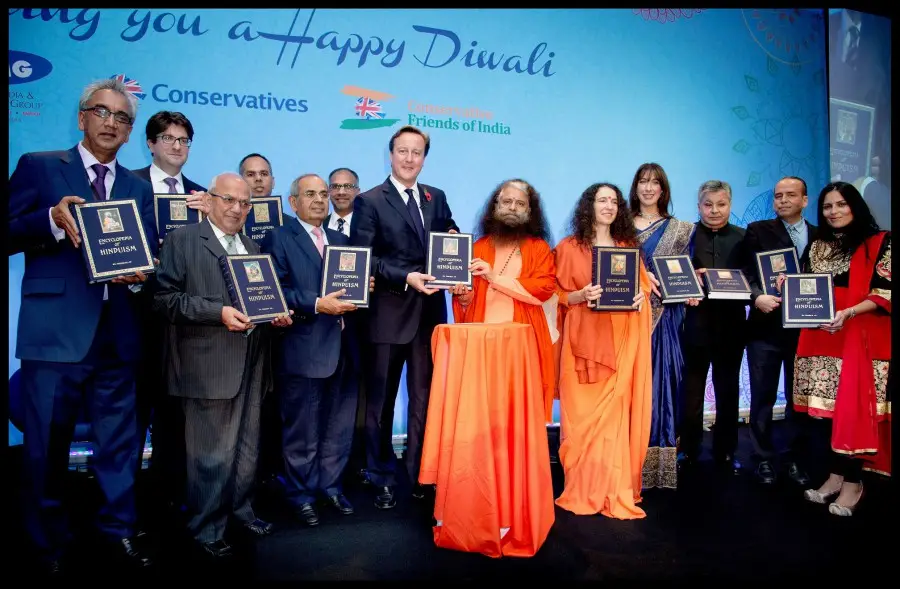
Early in her years at Parmarth, Sadhviji was asked to help with The Encyclopedia of Hinduism, a massive, multi-volume project to document the depth and breadth of Hindu philosophy, culture, and history. What began as light assistance — typing letters, managing drafts — soon turned into true editorial work. She found herself reading through entries by eminent Hindu scholars and realizing that some translations, while perfectly accurate in Sanskrit, might not land well with Western audiences.
One example she loves to recall is the entry for a certain animal in Hindu scripture — a donkey — translated with a slang word in English that, in America, would have raised eyebrows and distracted from the meaning entirely. Her job became one of cultural bridge-building: preserving the integrity of the tradition while ensuring the language would be accessible, accurate, and respectful across cultures. It was her first taste of weaving East and West not just in conversation, but in the careful craft of words — a skill that would define much of her work in the decades to come.
Directing the International Yoga Festival
Under Sadhviji’s direction, Parmarth Niketan’s International Yoga Festival grew from a small gathering into one of the world’s premier yoga events, drawing renowned saints, acharyas, and global teachers such as Gurmukh Kaur Khalsa, Kia Miller, Shiva Rae and Seane Corn. For her, it was never just about postures — it was about yoga as union, the living practice of the yamas and niyamas, and a call to conscious, compassionate living. Each March, the banks of the Ganga became a meeting place for seekers from over seventy countries, where cultural and religious boundaries dissolved in shared practice, satsang, sacred music, and environmental action, embodying her vision of Vasudhaiv Kutumbakam — the world as one family.
Giving Nightly Spiritual Discourses
Not long after she arrived in Rishikesh, Sadhviji attended an evening satsang with her guru, Pujya Swami Chidanand Saraswatiji, expecting—as always—to listen, learn, and take notes. Then she heard him say her name. She waited for the rest of the sentence, certain he was about to give her some instruction or errand. Instead, he simply gestured to the microphone then dropped into a deep meditation. He didn’t say another word, and slowly she realized he meant for her to speak.
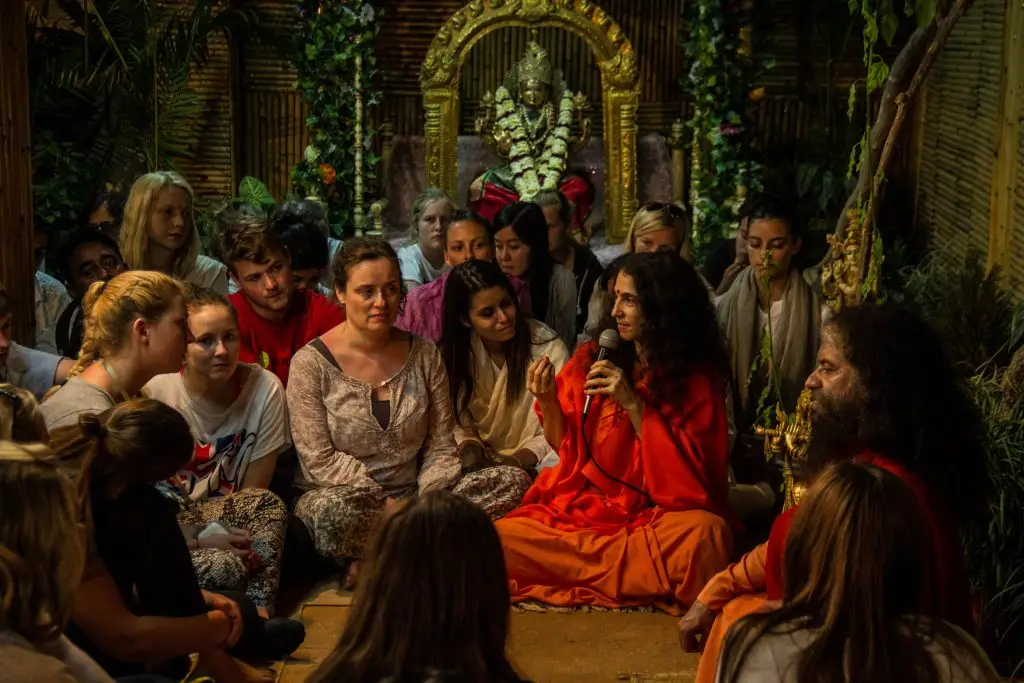
Her mind raced: What do I say? I haven’t prepared anything. But as she sat before the gathering, something unexpected happened. She let go. The fear, the self-consciousness, the need to craft every word — all dissolved. What flowed through her was not a rehearsed talk but a living current, a message that followed straight from the Divine, through her, to those gathered on the banks of the Ganga.
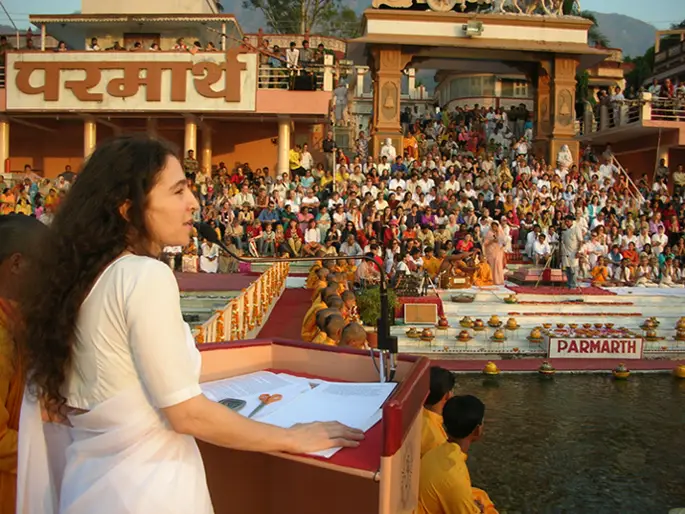
That night was the beginning of what became her nightly offering at Parmarth Niketan: open, unscripted satsangs where questions of the heart are met with wisdom that bridges East and West, ancient scripture and modern psychology. Over the years, seekers from every continent have come to sit in those circles, drawn by her gift for making spiritual truth both timeless and immediately personal, guiding each listener back to the presence of the Self.
International Director of Parmarth Niketan
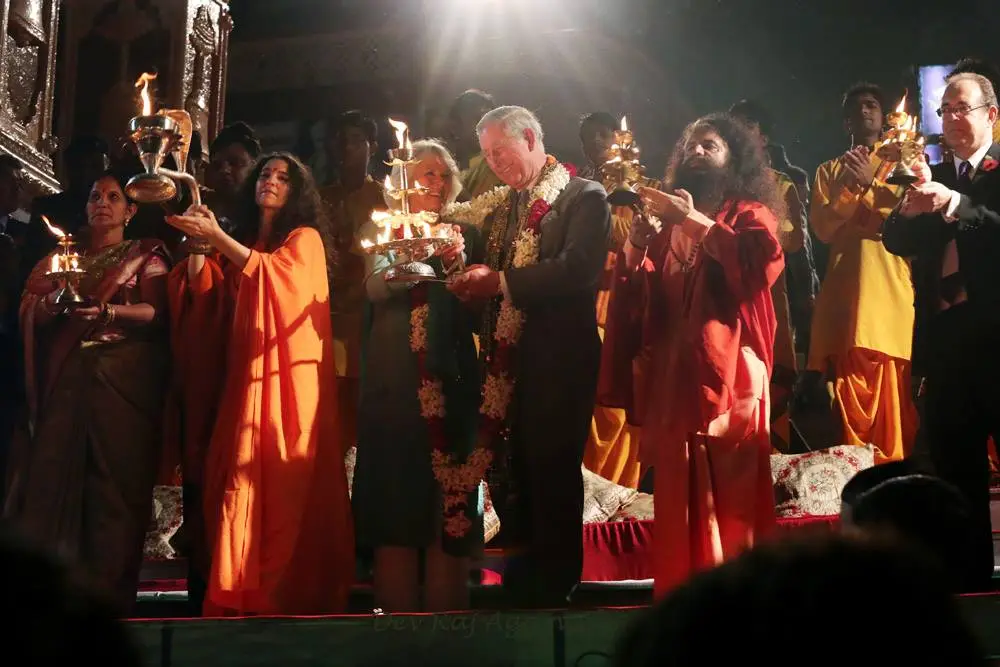
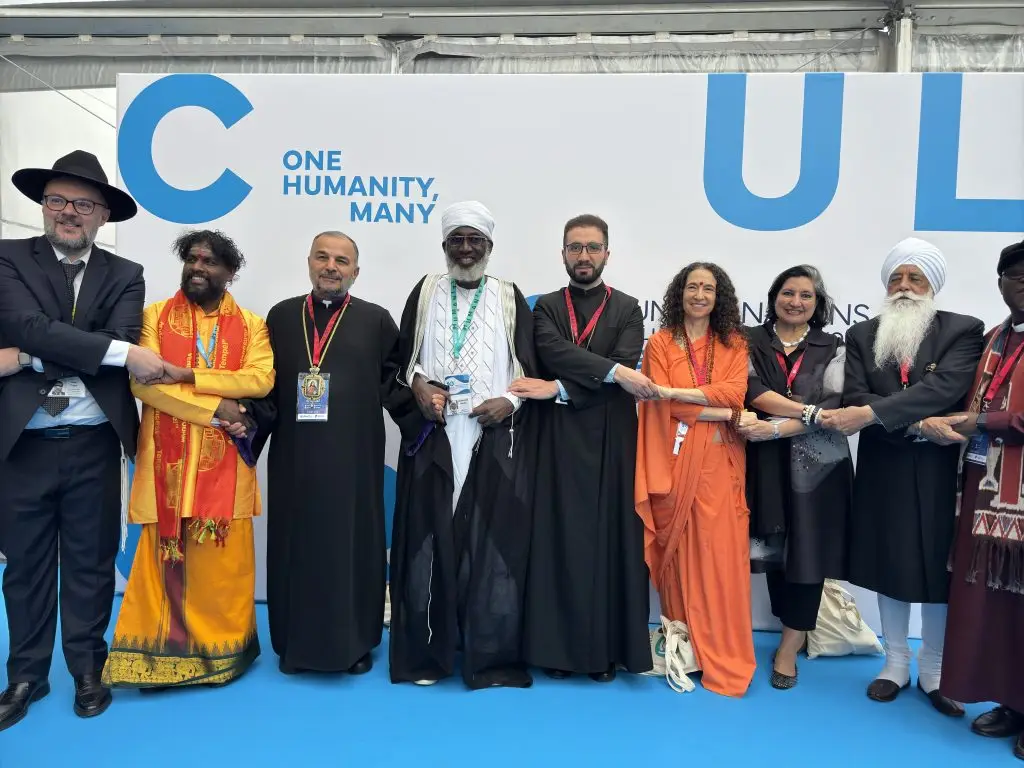
As International Director of Parmarth Niketan, Sadhviji became the ashram’s bridge to the world, hosting world leaders, spiritual icons, and cultural figures in Rishikesh. She welcomed Their Royal Highnesses Prince Charles (now King Charles) and Camilla, Duchess of Cornwall, for their first visit to the Ganga, guiding them through a sacred water blessing ceremony and evening aarti. She spoke to them about environmental preservation, tree plantation drives, and the ashram’s river clean-up initiatives. They left visibly moved, praising the work of Pujya Swamiji and the ashram’s environmental programs.
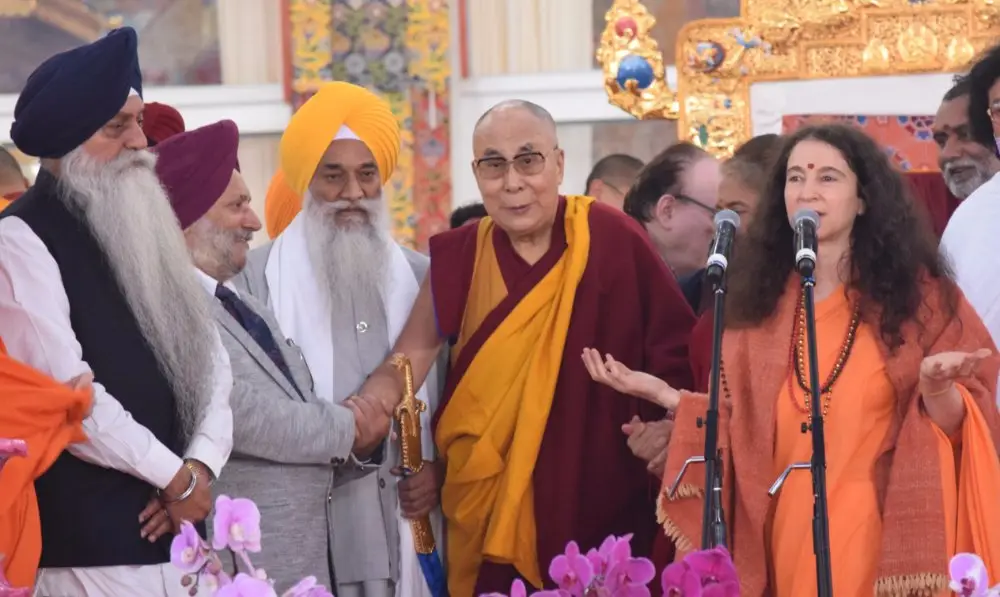
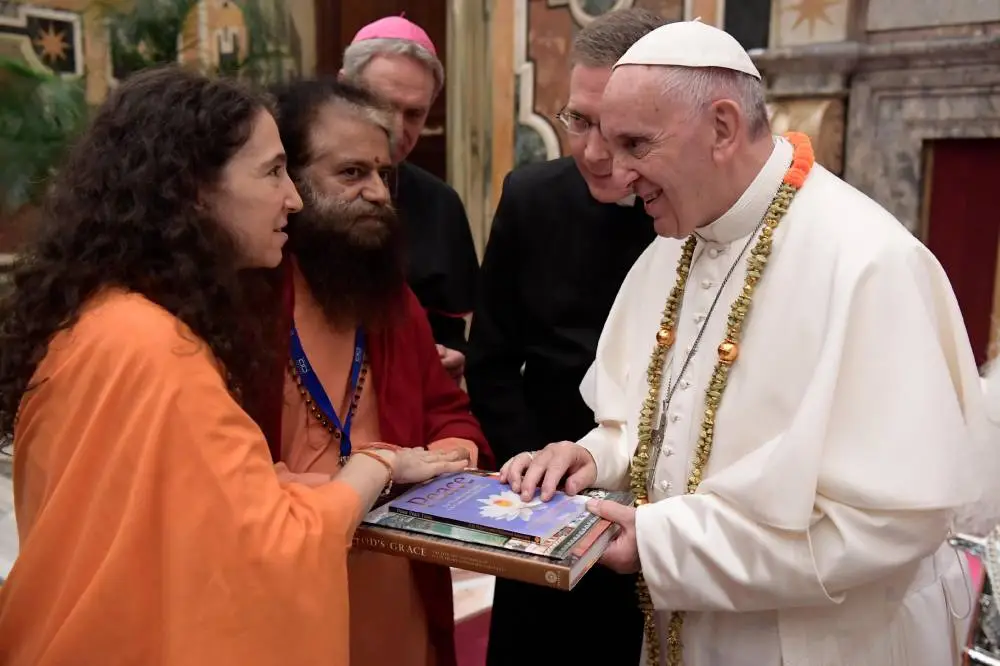
Her role also brought her into close collaboration with His Holiness the Dalai Lama during interfaith gatherings for peace, environmental protection, and Gandhiji’s 150th birth anniversary at the Gandhi Ashram in Delhi, where she joined leaders across faiths in pledging action for the planet. His Holiness released her memoir Come Home to Yourself at one of these events, blessing its message of inner awakening. In 2025, she was invited to Dharamshala for His Holiness’ 90th birthday celebrations, where she was the only female and one of only six religious leaders representing the religions of India on stage during the historic interfaith gathering honoring His Holiness. Speaking to the press from Dharamshala, she reflected on his call to forgive, to move forward, and to cultivate compassion—not as weakness, but as the deepest strength.
Global Spiritual Leadership
Beyond Parmarth’s gates, Sadhviji’s leadership spans continents. She served on the stearing committee for the The Moral Imperitive to End Extreme Poverty, a campaign of the World Bank, addressed the Parliament of the World’s Religions on “Faith for the Earth,” and spoken from UN platforms—including the launch of the UN’s Office of Genocide Prevention’s Plan of Action, the UN Alliance of Civilizations Global Summit, and the 75th anniversary of the Genocide Prevention Convention—on protecting sacred sites, fostering interfaith peace, uplifting women and girls, and safeguarding water.
At COP28’s first-ever Faith Pavilion, she brought the Hindu principles of Vasudhaiva Kutumbakam into climate action dialogues, highlighting both women’s leadership and the practical environmental projects of the Global Interfaith WASH Alliance and Divine Shakti Foundation. Her voice has been a steady call to see water not as a resource to exploit but as the basis for peace itself: “Without water, there can be no peace,” she told a UN audience.
Her decades of service have been recognized at the highest levels, including the Lifetime Achievement Award from U.S. President Joe Biden for her lifelong commitment to volunteer service. Through all of it, she remains rooted in the riverbank where her journey began—dedicated to bridging East and West, science and spirituality, personal healing and planetary service.

25 Years of Sanyas
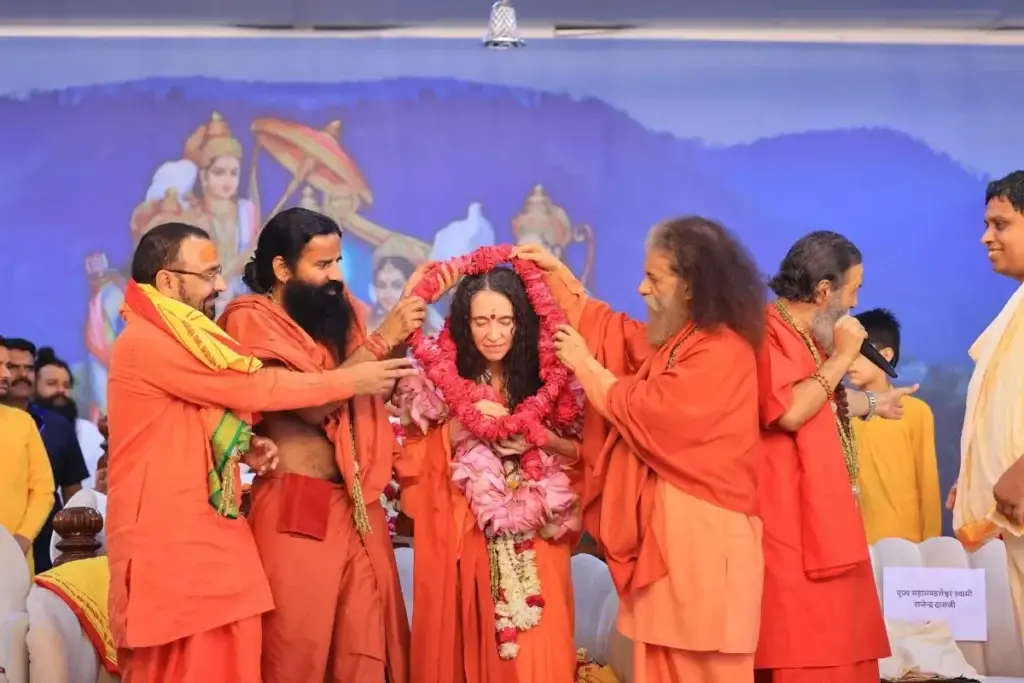
On the sacred day of Jyeshtha Purnima in 2025, Parmarth Niketan marked the silver jubilee of Sadhviji’s sanyas diksha—twenty-five years of deep devotion, tireless seva, and luminous spiritual service. The celebration was graced by some of India’s most revered saints, including Pujya Swami Chidanand Saraswatiji, who had initiated her into sanyas, as well as Pujya Swami Ramdevji, Mahamandaleshwar Swami Rajendra Dasji, Mahamandaleshwar Swami Ravindra Puriji, Mahamandaleshwar Swami Harichetnanandji, Pujya Sant Shri Murlidharji, Pujya Acharya Bal Krishna ji, Pujya Dr. Chinmaya Pandya ji, and Pujya Shri Ajay Bhai ji. Blessings, prayers, and words of love honored her as a living bridge between East and West, science and spirituality, seva and sadhana. A free multi-specialty medical camp by Medanta Hospital served hundreds of villagers, saints, and pilgrims as part of the festivities.
As she reflected on the milestone, Sadhviji shared a truth she has lived every day since donning the saffron robes: “Service isn’t what we do when we have extra time — it is the way we walk through the world, every moment, with our hands, our hearts, and our lives offered to the Divine.”


Sadhvi Bhagawati Saraswati
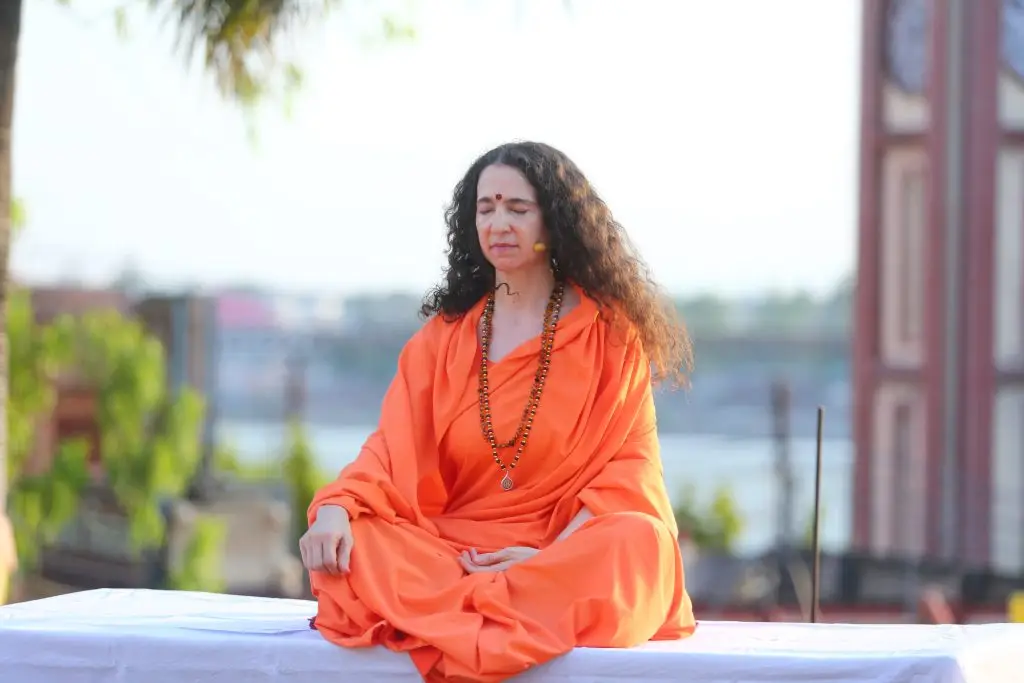
Sadhvi Bhagawati Saraswati, known as Sadhviji, is a global spiritual leader whose life bridges Hollywood and the Himalayas, psychology and spirituality, science and the sacred. Raised in Los Angeles and educated at Stanford University, she left behind a life of outward success to follow a deeper calling—one that led her to profound healing and transformation on the banks of the Ganga River in Rishikesh, India.
How to pronounce Sadhvi Bhagawati Saraswati
Sadhvi Bhagawati Saraswati is pronounced Sod-vee Bog-uh-wah-tee Sar-ruh-swat-ee. “Sadhvi” is the feminine form of Swami, a title given to one who has taken vows of sanyas—a path of renunciation in service to humanity. She is affectionately known by her students and community as Sadhviji (Sod-vee-jee). The addition of “ji” at the end is a traditional Indian honorific used to convey respect
Childhood in Hollywood
Sadhvi Bhagawati Saraswati grew up in Studio City, California, just up the hill from Universal Studios, in what she calls “the coveted world of Hollywood.” She attended a private prep school alongside the children of actors, directors, and producers, and even auditioned for commercials as a child, with a full set of headshots. It was a childhood of abundance. And it was also marked by challenge, suffering and trauma that planted deep roots of pain and disconnection, and set her on a path in search of healing, meaning, and wholeness.
Struggles and Search for Healing
By the summer after her first year at Stanford, she was nineteen, bulimic, and signing her own discharge papers from an in-patient eating disorder unit after less than a week. The head of the unit warned, “You’ll come crawling back.” She knew she wouldn’t — but also knew she was in deep trouble. Over the next six years, she threw herself into healing: daily or weekly therapy sessions, Prozac and Zoloft, dream journaling, and hitting baseball bats into pillows until her arms felt like noodles, envisioning her father. She went to Overeaters Anonymous for a time, but joked that surrendering to a higher power just gave her an excuse: “My higher power was taking a nap and didn’t come through for me.” She kept her life “on the OK side of pathology by a tightly wound coil of restriction and control” — getting straight A’s in her PhD program, dating, marrying Jim, and managing relapses without sliding back into “the hell of self-loathing.” She still cried easily — in yoga class during shavasana, at movies, even at AT&T commercials — but she had convinced herself that was normal.
Marriage and Life Abroad
After graduating from Stanford, she and Jim moved to Ecuador for a year to teach English — an adventure and a gift, since he’d delayed joining the Peace Corps to wait for her. Teaching came easily to her, with lesson plans drafted on the bus in the morning. But afternoons were long, and she found her way to the local state-run children’s hospital, volunteering in the burn unit. The conditions were shocking: babies in overflowing diapers screaming while nurses watched soap operas, children burned by exploding gas canisters or vats of boiling water, many dying overnight from rampant infections. She barely spoke Spanish, but she could hold them, rock them to sleep, and be with them. It was heartbreaking work, but it deepened her awareness of suffering — and the need for simple, human presence.
Reluctant Journey to India
In 1996, Jim said, “We have to go to India.” Her first thought was not of temples or the Himalayas, but of food. A vegetarian since age fifteen, she loved Indian restaurants because she didn’t have to interrogate the waiter about stealth chicken stock, beef bouillon, or oyster sauce in her meal. “Indians understood vegetarianism,” she writes — no hidden meat, and no eggs in the pasta or naan. But beyond that, she had no pull to India. Still, they planned a three-month trip before she was due back in class. She didn’t know it yet, but something in her life was about to end—and something entirely new begin.
Awakening on the Banks of the Ganga
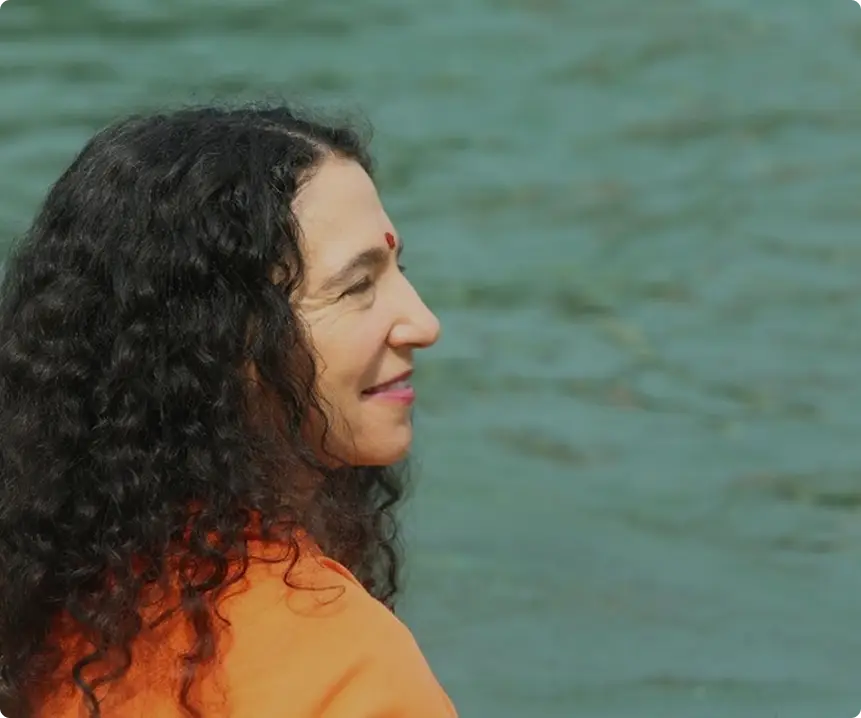
Shortly after arriving in Rishikesh, Sadhviji walked down to the banks of the Ganga River, intending simply to put her feet in the water. She was not seeking enlightenment or spiritual awakening. In fact, she did not consider herself religious or even particularly spiritual. Standing on the marble steps beside the rushing river, something unexpected happened. She experienced what she later described as a profound encounter with the Divine. It felt as though a veil had been lifted from every way she had known herself and the world. The Divine was no longer something separate or distant, but present in everything — in the river, the mountains, the people around her, and within herself. For the first time in her life, she experienced herself as whole, infinite, and one with all of existence. As tears streamed down her face, she found herself repeating, “Oh my God, it’s so beautiful.” They were not tears of sadness or happiness, but what she calls “tears of truth” — tears of coming home. Home not to a place, but to her deepest Self.
That experience on the banks of Mother Ganga changed the course of her life forever. What she received there was more real than anything she had experienced in her first twenty-five years. There was no turning back.
Meeting Pujya Swamiji
Soon after arriving in Rishikesh, she met H.H. Pujya Swami Chidanand Saraswatiji at Parmarth Niketan Ashram. In that first darshan, he looked into her with a love so vast it seemed to permeate every cell of her being. When she told him about her fear, her anxiety, her abuse, her eating disorder, he listened without judgment and then said, “You are waiting for someone to come and say, ‘Now you are done.’ No one will do that. You must draw the line yourself… You can carry this pain to your grave, or you can give it up tonight.”
Healing and Transformation
That evening, during the sacred sunset aarti, Pujya Swamiji instructed Sadhviji to take an oil lamp, wave it, and then “give all your pain to Ganga.” Part of her wanted to dismiss it as nonsensical — but she had promised herself she would keep her heart open in India, or leave. She stepped calf-deep into the moonlit river, cupped its water in her hands, and one by one released the people, memories, wounds, and stories that had shaped her suffering. “Take the pain,” she prayed, pouring the water back into the river. In the weeks and months that followed, the memories remained, but they no longer held power over her. She could no longer split into pieces. She was whole.
Commitment to Service in India
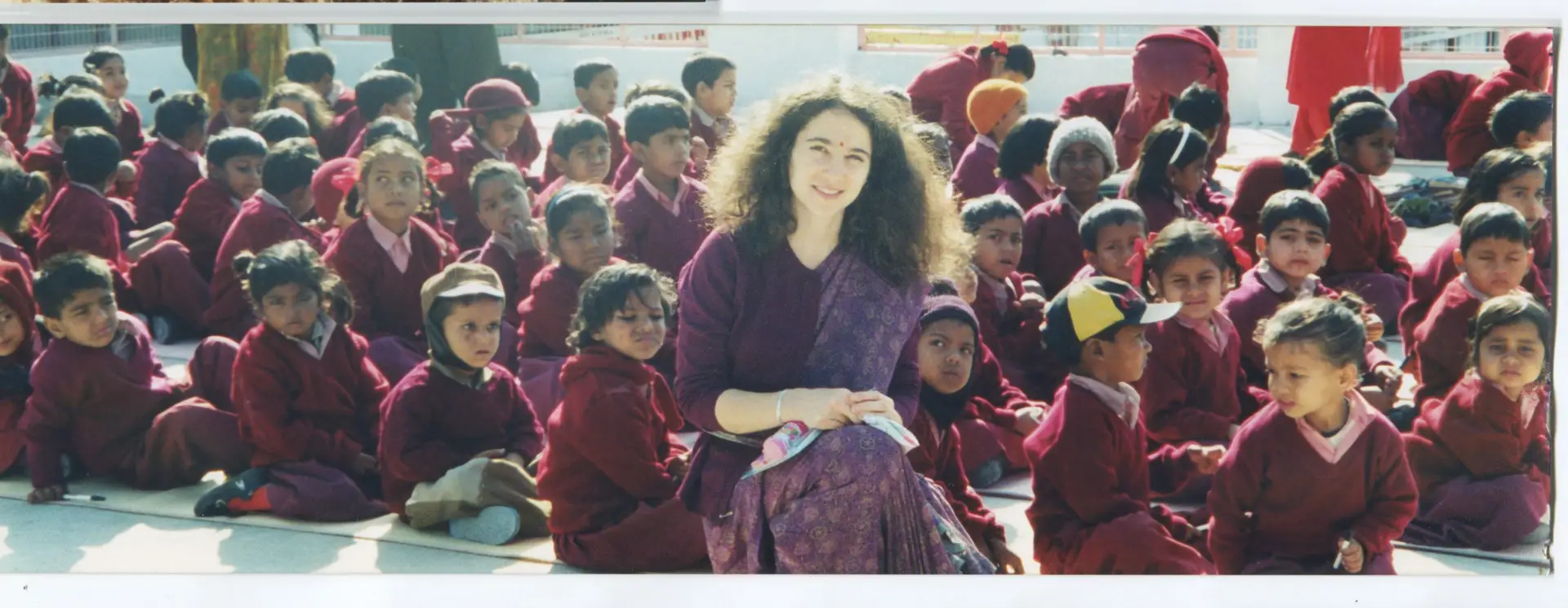
Sadhviji told herself she was taking a “year off” from graduate school, but part of her knew she would not be returning. The ashram was home. Mother Ganga, previously known to her only as “the Ganges,” was now her refuge. Under Pujya Swamiji’s guidance, she immersed herself in seva — selfless service. She fondly remembers never being happier than when she was fully in service.
Her earliest seva focused primarily on women’s empowerment and education. She helped develop programs for disadvantaged women and girls, supported educational initiatives for impoverished children, and worked to ensure that vulnerable communities had access not only to basic necessities, but also to the values, dignity, and opportunities needed to thrive.
As devastating natural disasters struck the region and beyond, her service expanded into humanitarian relief efforts. Beginning with the 2004 South Indian tsunami and continuing through earthquakes, floods, and other crises, she helped coordinate and deliver both immediate humanitarian assistance and long-term rebuilding efforts — including schools, vocational training centres, medical services, and community development initiatives.
What had begun as her own search for healing had become the foundation for an entirely new life: one devoted to serving others.
Taking Sanyas
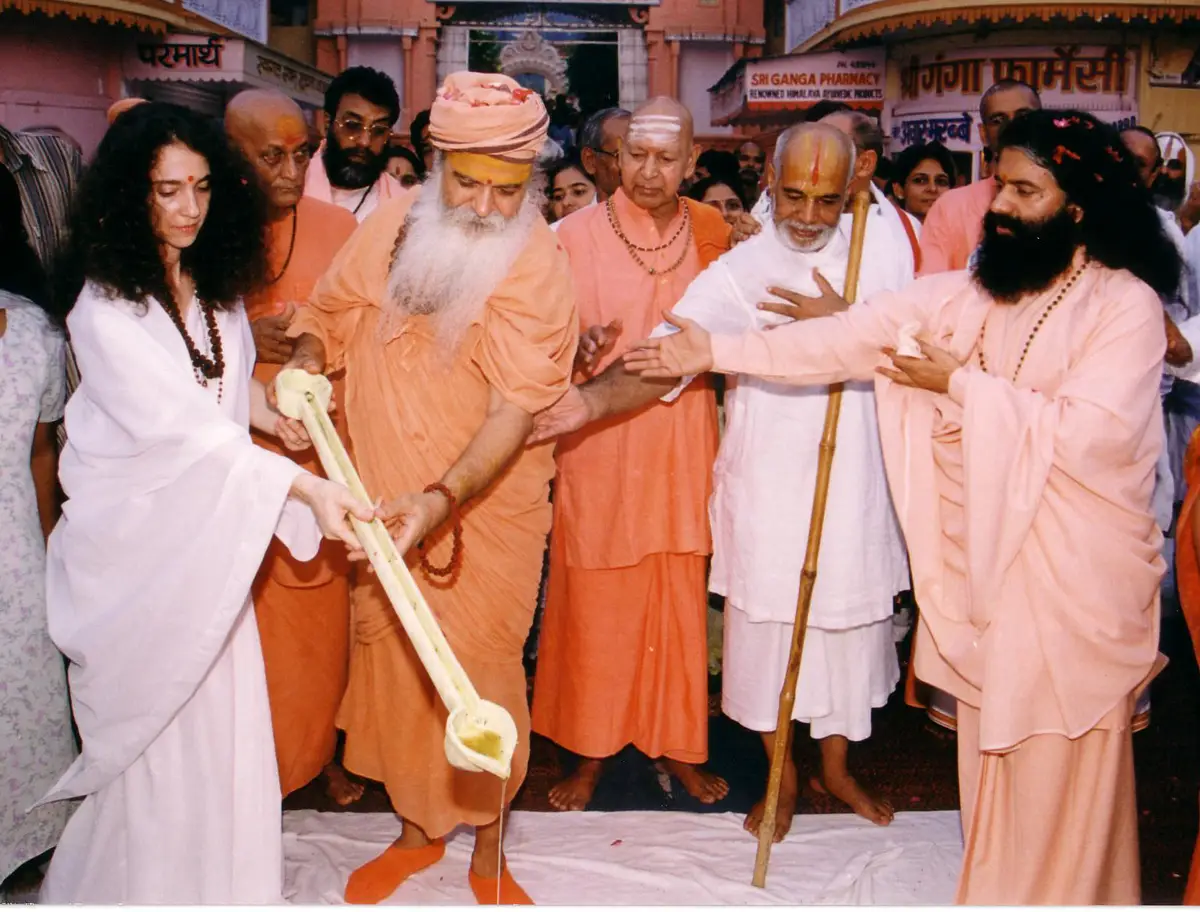
Four years into her life at Parmarth Niketan, Sadhviji made the decision to take sanyas — the formal vow of monastic renunciation in the Hindu tradition. It was not a rejection of life, but a relinquishing of the personal identity, attachments, and ambitions that had once defined her. She renounced her name, her possessions, and the pull of worldly achievement, stepping fully into a life devoted to service, spiritual practice, and the welfare of all beings.
On the day of her initiation, Pujya Swami Chidanand Saraswatiji placed around her shoulders the sacred saffron robes. He explained that saffron is the color of the rising sun — it burns away the darkness not for itself, but for the benefit of everyone, shining equally on all. “From today,” he told her, “your life is not your own. You belong to God, and you live to serve everyone, regardless of caste, creed, race, religion, or nationality.”
For Sadhviji, those words were not ceremonial; they became a living vow. In taking sanyas, she embraced a path in which every thought, word, and action is offered in service — a path that has guided her for nearly three decades, carrying the light of the Divine to wherever there is darkness.
Editing the Encyclopedia of Hinduism
Early in her years at Parmarth, Sadhviji was asked to help with The Encyclopedia of Hinduism, a massive, multi-volume project to document the depth and breadth of Hindu philosophy, culture, and history. What began as light assistance — typing letters, managing drafts — soon turned into true editorial work. She found herself reading through entries by eminent Hindu scholars and realizing that some translations, while perfectly accurate in Sanskrit, might not land well with Western audiences.
One example she loves to recall is the entry for a certain animal in Hindu scripture — a donkey — translated with a slang word in English that, in America, would have raised eyebrows and distracted from the meaning entirely. Her job became one of cultural bridge-building: preserving the integrity of the tradition while ensuring the language would be accessible, accurate, and respectful across cultures. It was her first taste of weaving East and West not just in conversation, but in the careful craft of words — a skill that would define much of her work in the decades to come.
Directing the International Yoga Festival
Under Sadhviji’s direction, Parmarth Niketan’s International Yoga Festival grew from a small gathering into one of the world’s premier yoga events, drawing renowned saints, acharyas, and global teachers such as Gurmukh Kaur Khalsa, Kia Miller, Shiva Rae and Seane Corn. For her, it was never just about postures — it was about yoga as union, the living practice of the yamas and niyamas, and a call to conscious, compassionate living. Each March, the banks of the Ganga became a meeting place for seekers from over seventy countries, where cultural and religious boundaries dissolved in shared practice, satsang, sacred music, and environmental action, embodying her vision of Vasudhaiv Kutumbakam — the world as one family.
Giving Nightly Spiritual Discourses
Not long after she arrived in Rishikesh, Sadhviji attended an evening satsang with her guru, Pujya Swami Chidanand Saraswatiji, expecting—as always—to listen, learn, and take notes. Then she heard him say her name. She waited for the rest of the sentence, certain he was about to give her some instruction or errand. Instead, he simply gestured to the microphone then dropped into a deep meditation. He didn’t say another word, and slowly she realized he meant for her to speak.
Her mind raced: What do I say? I haven’t prepared anything. But as she sat before the gathering, something unexpected happened. She let go. The fear, the self-consciousness, the need to craft every word — all dissolved. What flowed through her was not a rehearsed talk but a living current, a message that followed straight from the Divine, through her, to those gathered on the banks of the Ganga.
That night was the beginning of what became her nightly offering at Parmarth Niketan: open, unscripted satsangs where questions of the heart are met with wisdom that bridges East and West, ancient scripture and modern psychology. Over the years, seekers from every continent have come to sit in those circles, drawn by her gift for making spiritual truth both timeless and immediately personal, guiding each listener back to the presence of the Self.
International Director of Parmarth Niketan
As International Director of Parmarth Niketan, Sadhviji became the ashram’s bridge to the world, hosting world leaders, spiritual icons, and cultural figures in Rishikesh. She welcomed Their Royal Highnesses Prince Charles (now King Charles) and Camilla, Duchess of Cornwall, for their first visit to the Ganga, guiding them through a sacred water blessing ceremony and evening aarti. She spoke to them about environmental preservation, tree plantation drives, and the ashram’s river clean-up initiatives. They left visibly moved, praising the work of Pujya Swamiji and the ashram’s environmental programs.
Her role also brought her into close collaboration with His Holiness the Dalai Lama during interfaith gatherings for peace, environmental protection, and Gandhiji’s 150th birth anniversary at the Gandhi Ashram in Delhi, where she joined leaders across faiths in pledging action for the planet. His Holiness released her memoir Come Home to Yourself at one of these events, blessing its message of inner awakening. In 2025, she was invited to Dharamshala for His Holiness’ 90th birthday celebrations, where she was the only female and one of only six religious leaders representing the religions of India on stage during the historic interfaith gathering honoring His Holiness. Speaking to the press from Dharamshala, she reflected on his call to forgive, to move forward, and to cultivate compassion—not as weakness, but as the deepest strength.
Global Spiritual Leadership
Beyond Parmarth’s gates, Sadhviji’s leadership spans continents. She served on the stearing committee for the The Moral Imperitive to End Extreme Poverty, a campaign of the World Bank, addressed the Parliament of the World’s Religions on “Faith for the Earth,” and spoken from UN platforms—including the launch of the UN’s Office of Genocide Prevention’s Plan of Action, the UN Alliance of Civilizations Global Summit, and the 75th anniversary of the Genocide Prevention Convention—on protecting sacred sites, fostering interfaith peace, uplifting women and girls, and safeguarding water.
At COP28’s first-ever Faith Pavilion, she brought the Hindu principles of Vasudhaiva Kutumbakam into climate action dialogues, highlighting both women’s leadership and the practical environmental projects of the Global Interfaith WASH Alliance and Divine Shakti Foundation. Her voice has been a steady call to see water not as a resource to exploit but as the basis for peace itself: “Without water, there can be no peace,” she told a UN audience.
Her decades of service have been recognized at the highest levels, including the Lifetime Achievement Award from U.S. President Joe Biden for her lifelong commitment to volunteer service. Through all of it, she remains rooted in the riverbank where her journey began—dedicated to bridging East and West, science and spirituality, personal healing and planetary service.
25 Years of Sanyas
On the sacred day of Jyeshtha Purnima in 2025, Parmarth Niketan marked the silver jubilee of Sadhviji’s sanyas diksha—twenty-five years of deep devotion, tireless seva, and luminous spiritual service. The celebration was graced by some of India’s most revered saints, including Pujya Swami Chidanand Saraswatiji, who had initiated her into sanyas, as well as Pujya Swami Ramdevji, Mahamandaleshwar Swami Rajendra Dasji, Mahamandaleshwar Swami Ravindra Puriji, Mahamandaleshwar Swami Harichetnanandji, Pujya Sant Shri Murlidharji, Pujya Acharya Bal Krishna ji, Pujya Dr. Chinmaya Pandya ji, and Pujya Shri Ajay Bhai ji. Blessings, prayers, and words of love honored her as a living bridge between East and West, science and spirituality, seva and sadhana. A free multi-specialty medical camp by Medanta Hospital served hundreds of villagers, saints, and pilgrims as part of the festivities.
As she reflected on the milestone, Sadhviji shared a truth she has lived every day since donning the saffron robes: “Service isn’t what we do when we have extra time — it is the way we walk through the world, every moment, with our hands, our hearts, and our lives offered to the Divine.”
Weekly wisdom from the Himalayas
Spiritual tools, stories, and guidance to live with peace, purpose, and presence delivered to your inbox.
Sadhviji is a Vedic monk, Stanford-educated psychologist, and global spiritual leader raised in Hollywood and transformed by nearly 30 years in the Himalayas, India. Her teachings help people quiet the mind, heal the heart, and live in deep alignment with their true Self.