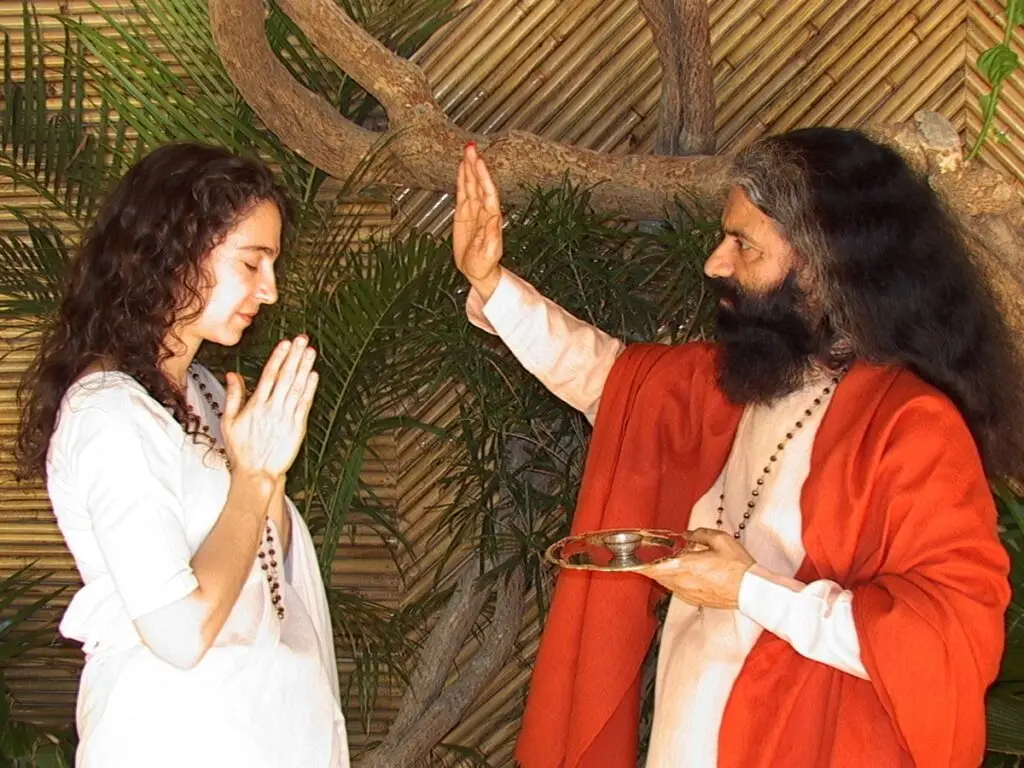
Forgiving my biological father for the abuse and abandonment he inflicted on me was not only the hardest piece of psychological work I have ever done, but it was also the doorway to my freedom, my happiness and my life. “Give it to the river,” Swamiji had said. “Just give it to the river – all your pain, all your anger. Forgive him.” When I came to India at 25, not knowing what it was that had drawn me here, other than good vegetarian food, and found myself sitting in front of a holy man, a saffron-clad monk who turned out to be one of the most renowned Hindu leaders in the world, I had no premonition that he was about to open to the door to the rest of my life.
I was a psychology graduate from Stanford, getting my PhD in pediatric neuropsychology. I had spent years in therapy working through the childhood trauma of abuse and abandonment. One thing I knew for sure: some things are just unforgiveable. My healing would have to take place around the abuse, through reliving it enough times in as deep a way possible that somehow it would lose its power over me. But forgive? Let go? The suggestion seemed to border on the absurd and was completely incomprehensible and certainly impossible.
The Mistake We All Make
If I forgive and let go, how would the universe remember to keep score? Who was going to make sure that he was punished in an appropriate cosmic court of justice? Forgiveness seemed to be a dishonoring of the debilitating suffering I had endured as a child and adolescent in dealing with the ramifications of this abuse and abandonment. I needed to hold on – for cosmic justice and for my own self-identity.
These are the mistake many of us make. We confuse forgiveness with absolution. We confuse letting go with negating or condoning. We fear who we would be without the story.
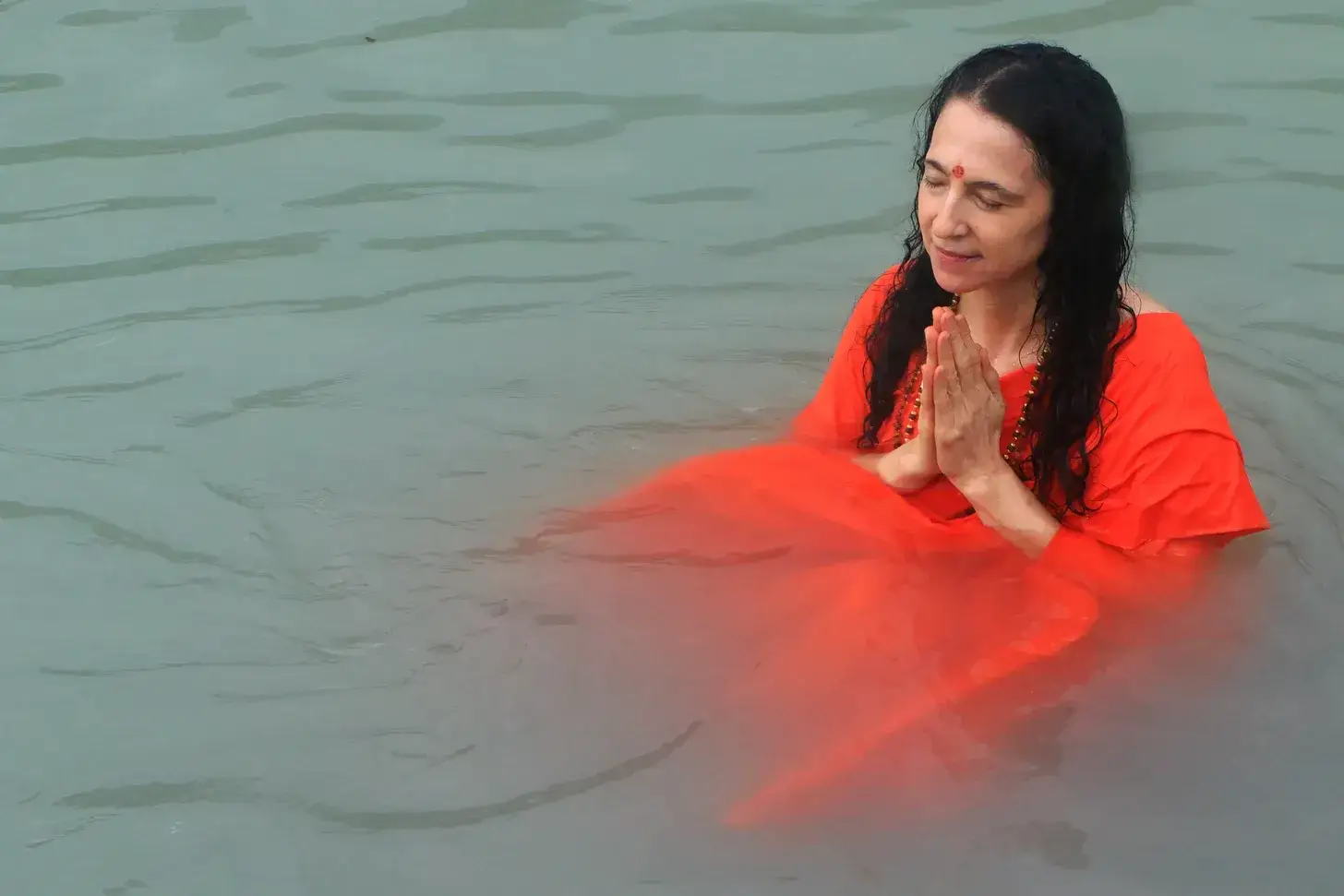
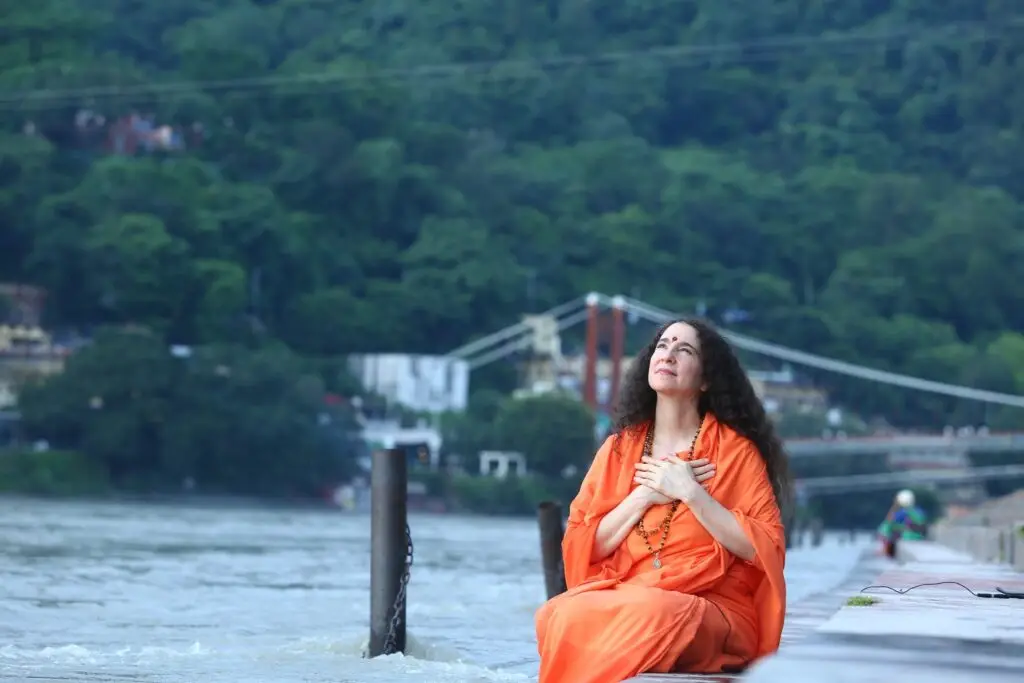
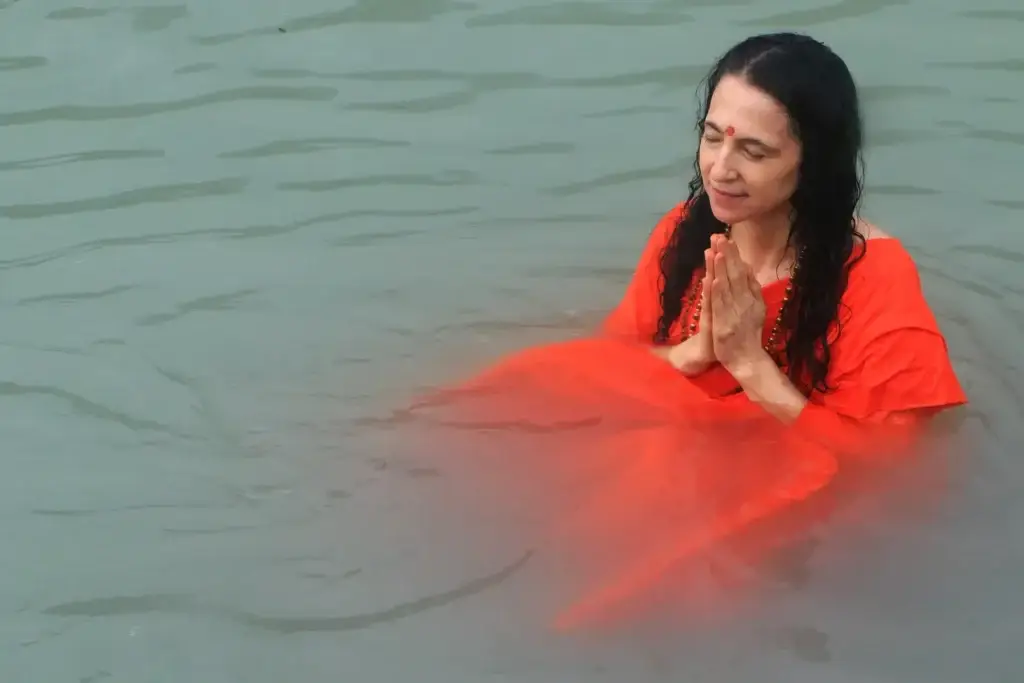
As I stood in the waters of the Ganges river – revered as the Mother Goddess Ganga, the river of liberation – as I offered, as sincerely and wholeheartedly as I could, the anger, grief, despair, longing, rage and self-hatred that had accumulated in the very cells of my being and permeated every breath I took, into the rushing water flowing over my legs, I realized I was not absolving him. I was simply freeing myself.
To hold on, tenaciously, furiously, desperately to my end of the karmic cord connecting me to him, me to the abuse, was to ensure I spent my life bound. Not bound by the abuse itself, but bound by the karmic cord I held onto. Bound by the stories I told myself about what the abuse and abandonment meant about me, about my unworthiness, bound by the psychological ramifications of the abuse.
The childhood trauma had embedded itself in my mind, body and behavior — in addiction, eating disorders, depression —long after the abuse itself had ended.
It Was Never About Him
It was not him or his actions that continued to bind me, at 25, but the narrative in my own mind, the identification that played like a record on a broken old record player where the needle kept skipping back to the beginning, replaying and replaying the same song: I am a victim. I am broken. I am unworthy. He is a monster.
What I was being asked to do was not negate, dishonor or undermine the depth of the pain I suffered or the inherent wrongness of what he had done. I was simply being asked to realize that – despite the wrong he had done – I still deserved to be free. I was being asked to realize that now it was I, not him, who was keeping me stuck. His abuse had ended more than 15 years earlier. But I carried the stories into each new morning and slept with them each night. It was my arms that clutched the stories. It was, therefore, up to me to let it go.
What Forgiveness Actually Is
Forgiveness does not mean that what someone did is forgivable – morally, ethically, or even legally. It is not a call to the universe, or the legal system, to condone or absolve the perpetrator. It is very simply the deep awareness that we are not the karmic police. We do not need to keep track of who deserves what, who has done what. The law of karma is perfect. It functions as its own natural law, requiring nothing from us. Forgiveness means one thing and one thing only – that I will no longer offer up the moments and years of my life on the altar of someone else’s ignorance, ego, illusion, violence, fear, or confusion. They have harmed us enough already. Why offer up the rest of what we have? Forgiveness means that my inherent worthiness of freedom, of grace, of joy, of peace, of awakening is, in no way, diminished or impacted by the wrong actions of another.
Forgiveness, I realized, had nothing to do with him and everything to do with me.
So, nearly 30 years ago, I stood, calf-deep in the waters of Ganga as the moon rose overhead and – convinced that there was no way this would actually work – offered the pain, the anger and the stories I told myself – to the waters of the sacred Ganga. And, to the absolute incredulity of my over-educated academic mind, it worked!
The Gift the River Gave Me
I share this very personal story as an invitation and, I hope, as an inspiration. As I travel around the world, and as the world travels to Rishikesh, I hear stories every day of trauma and I see the crushing consequences on the bodies, minds, hearts, and lives of those carrying the trauma. Having worked with a wide variety of psychological healing modalities in my late teens and early twenties, what I found is that they were able to bring me deeply into the darkness, into the darkness of my memories, my fear, my rage, my grief, into the bottomless pit of the “hungry ghost” I had become. These modalities made me able to sit with the memories. But none of them was able to get me out of the darkness again and into the light. That was the gift, the “prasad” of forgiveness: the emotional healing that no therapy had been able to give me.