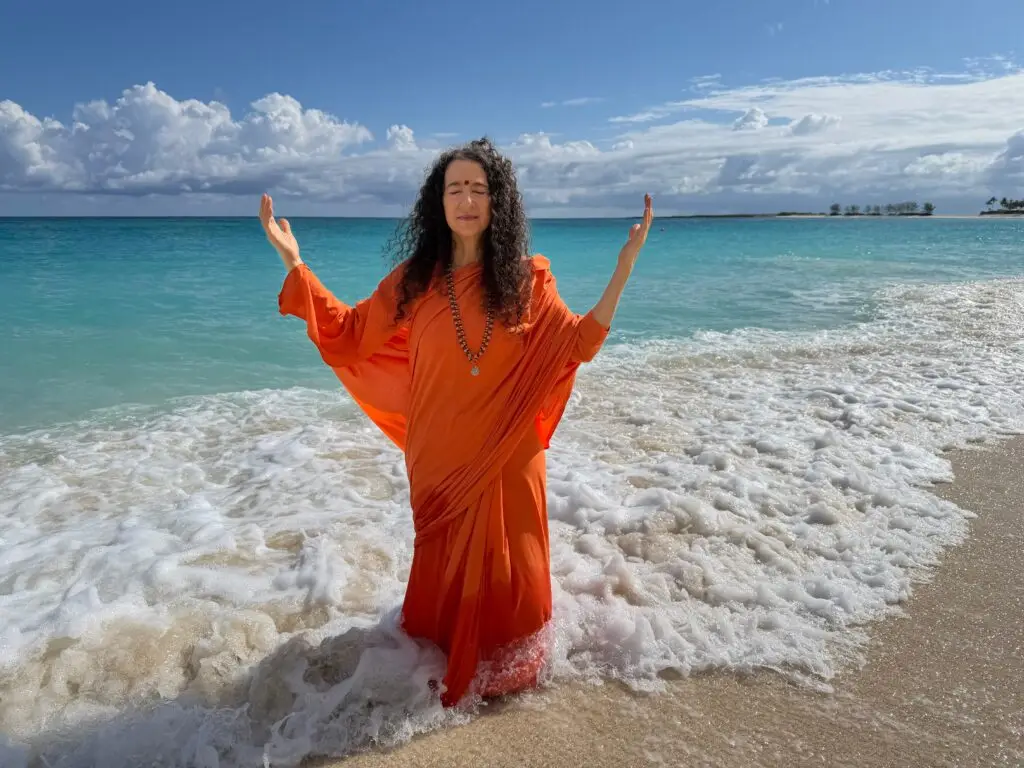
One of the biggest misconceptions about the spiritual path is that if we’re meditating enough, praying enough or living consciously enough, we shouldn’t feel anger, grief, fear or disappointment anymore. We imagine that peace means the absence of difficult emotions. Then, when those emotions inevitably arise, we think we’ve failed somehow.
But that isn’t actually what spiritual practice gives us.
Sadhviji is a reader-supported publication. To receive new posts and support my work, consider becoming a free or paid subscriber.Subscribe
Spirituality doesn’t promise a life without waves. It promises a different relationship with the waves, and with the stillness beneath the waves!
If you’ve ever stood in the ocean, you’ve probably had the experience of seeing a large wave rushing toward you. If you’re not a confident swimmer, your instinct is often to turn around and run. But that is usually the worst thing you can do. The wave catches you from behind, throws you off balance, and tumbles you headfirst into the sand.
Experienced swimmers know something different. In shallow water, they dive in, beneath the wave, allowing it to pass overhead and crash on the sand behind them. In deeper water, they simply rise with it and settle back down again. They don’t try to outrun it. They don’t fight it. They don’t panic. They understand the nature of the ocean.
Our emotions are very much the same.
Anger comes. Fear comes. Grief comes. Joy comes. Disappointment comes. This is simply the nature of the human mind and heart. Thoughts, feelings and emotions are constantly moving. Like waves upon the surface of the ocean, they arise, they build, they crest and they recede. The problem is not that the waves exist. The problem is that we believe they shouldn’t.
How often have you found yourself thinking, “I shouldn’t be angry.” “I’ve been meditating for years. Why am I still anxious?” “If I were really spiritual, I wouldn’t feel jealous or hurt.”
The moment we begin resisting the emotion, we create even more suffering than the emotion itself. It’s like trying to outrun a wave! Rather than finding ourselves safe, out of reach of the wave, we find ourselves with metaphoric mouthfuls of sand, coughing up salt water. It doesn’t work.
Ironically, the harder we try to push an emotion away, the stronger it often becomes. We distract ourselves. We bury ourselves in work. We scroll through our phones. We eat. We stay busy. We pretend we’re “fine.” We convince ourselves that if we don’t acknowledge the feeling, perhaps it will disappear.
But emotions don’t disappear simply because we refuse to look at them.
Like the wave we try to outrun, they eventually catch us from behind.
One of the remarkable things about emotions is that they have a natural rhythm. Think about the last time you became angry. The intensity didn’t stay exactly the same for hours or days. It built. It reached a peak. Then, gradually, it began to soften.
Every emotion has this natural intelligence. What keeps it alive is usually not the emotion itself, but the story we build around it. Perhaps someone says something hurtful. Anger arises. That is the first wave. Then the mind begins its work.
“I can’t believe they said that.”
“They always do this.”
“I should have answered differently.”
“What if they say it again tomorrow?”
Hours later, the conversation has ended, but the mind continues replaying it. The body continues producing the same stress response. The original wave has already passed, but we have created another one. Then another. And another.
Very often, it is not the original experience that causes the greatest suffering. It is the story and the drama we have attached to it. If we can allow the emotion to exist, without attaching a drama to it, it will rise, peak and dissipate on its own.
This is one of the greatest gifts of meditation.
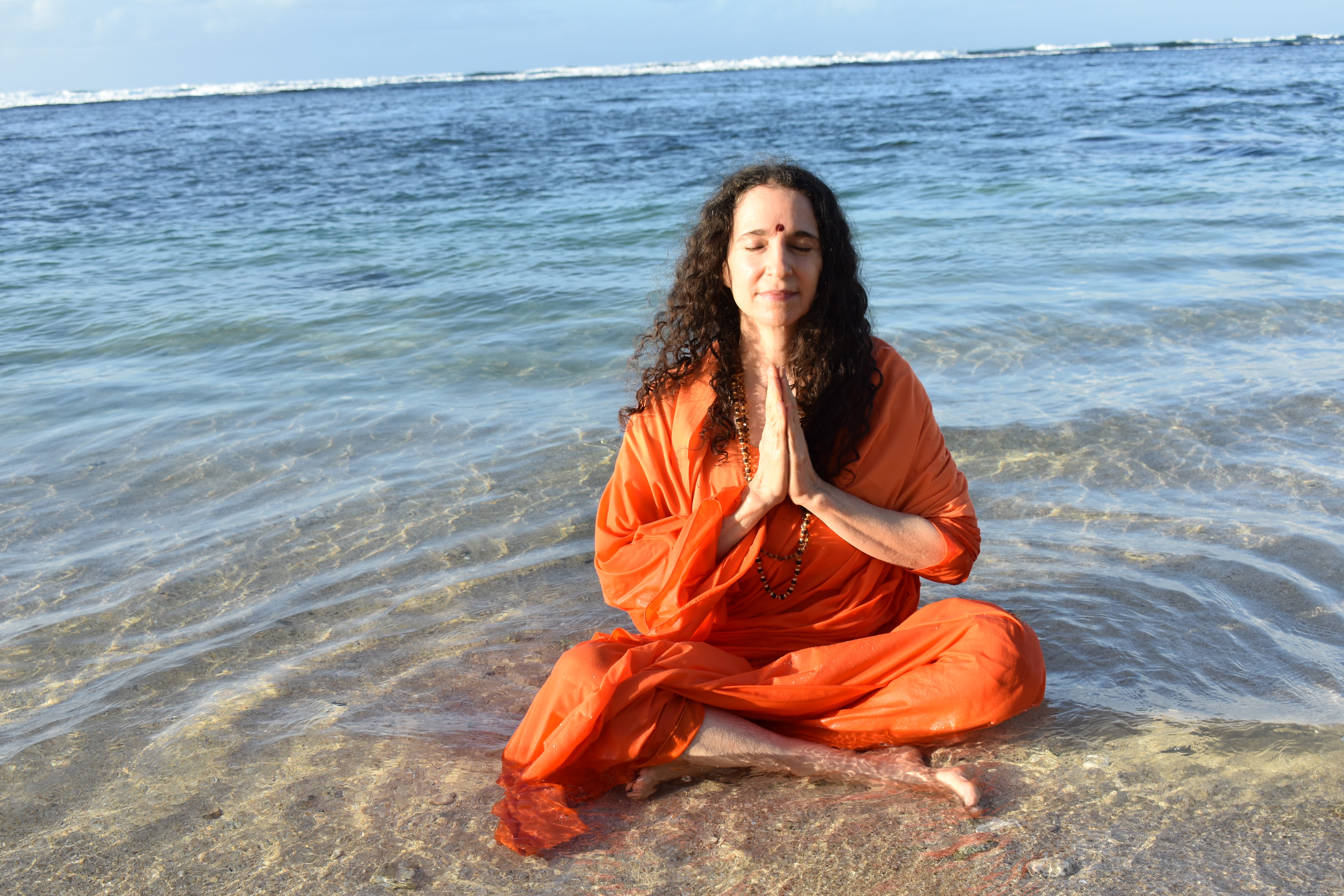
Meditation is not suppression. It is not pretending we aren’t angry. It is not convincing ourselves we shouldn’t feel grief or fear. Meditation simply teaches us to notice what is arising without immediately becoming it.
The ancient yogis called this sakshi—the witness consciousness.
Just as I shared in my recent article, You Are Not Your Mind, there is within each of us an awareness that notices every thought, every feeling and every emotion. That awareness is always present, whether anger is arising or joy is arising. It watches both. It knows both. But it is neither.
The one who notices the anger cannot be the anger.
The one who notices the fear cannot be the fear.
This doesn’t mean we disconnect from our emotions or become indifferent to them. Quite the opposite. It means we finally allow ourselves to feel them fully because we are no longer afraid that they define us.
We stop saying, “I am angry.” Instead we begin to notice, “Anger is arising.”
It may seem like a very small semantic shift, but it is actually a profound shift in identity. We are no longer fusing our minds, hearts and lives with every passing emotional wave. We are becoming the awareness that watches the waves rise and fall.
The peace that meditation gives us is not the peace of calming every wave.
It is the peace of remembering that we are not the waves.
It is the peace that comes from no longer being tossed around by every emotion that passes through the mind.
Like the experienced swimmer, we learn to move with the waves rather than trying to outrun them.
How to Practice Letting the Waves Pass
So how do we actually live this teaching?
The next time you notice a strong emotion arising, don’t immediately ask yourself how to make it disappear. Instead, simply become aware of it. Just notice it in the way you might notice clouds gathering on an otherwise sunny day.
Notice where you feel the rising emotion in your body. Is there tightness in your chest? A knot in your stomach? Tension in your jaw or shoulders? Before trying to change the feeling, simply allow yourself to notice it.
Then bring your awareness to your breath. Let the breath anchor itself low in the abdomen, below the belly button. As you exhale, allow the exhalation to become long, slow and gentle. Allow a moment after the exhalation before you take the next inhalation. Just rest in that moment, in the energy center below your naval. Don’t force the emotion away. Simply soften around it. Very often, what we resist becomes tighter. What we allow begins to move.
If you work with the chakras, or are interested in beginning, bring your awareness to the Svadhisthana Chakra, the energy center about two inches below your naval. It is said to be, literally, the seat of the self. Imagine breathing spaciousness into that area. Rather than trying to stop the wave, simply allow it to rise, crest and fall in its own time.
Sometimes our emotions also long for ritual.
The ancient rishis, sages and mystics taught us something critical for our lives today. The rituals they instructed were meant to deepen our spirituality, bring us closer to the Divine and heal our lives. They knew that our hearts often need a symbolic way to let go. If you are holding anger, grief or fear, write it down on a piece of paper and safely offer it into a sacred fire. As the paper burns, allow yourself to consciously release the burden you have been carrying.
Or stand beside a flowing river, a lake or the ocean. Offer your pain into the water with a sincere prayer for freedom. As you watch the water flow, remember deeply that the nature of nature is change and flow. Let the flow into your own heart.
If you find yourself on a hilltop or somewhere the wind is strong, take a slow, conscious breath and, as you exhale, imagine offering your fear into the air. Allow the wind to carry away what you no longer need to hold.
We are part of nature. Fire transforms. Water carries. Air releases. Earth receives. These are not merely beautiful rituals. They are reminders that life is always moving, always changing, always inviting us to let go of what no longer serves us.
Most importantly, be patient with yourself.
The goal is not to become someone who never feels anger, grief or fear. The goal is not to become emotionally numb. Indifference, apathy and disconnection are not spiritual virtues. The goal is simply to remember, again and again, that whatever emotion is arising, it is not who you are. You are the light of awareness shining on it all.
Our scriptures remind us that the mind alone is the cause of both bondage and liberation. When we identify with every passing thought and emotion, we remain bound by them. But when we remember ourselves as the witness – the silent awareness in whose presence all thoughts, feelings and emotions arise and pass – we begin to taste true freedom.
The waves may continue to come. Life will still bring joy and sorrow, gain and loss, praise and blame. This is simply the nature of life. But slowly, through practice, we stop turning our backs to the waves. We stop exhausting ourselves trying to outrun them. We stop believing that something has gone wrong simply because we feel deeply. Instead, we meet each wave with presence, with awareness, with attention.
We let it rise.
We let it fall.
And we discover something extraordinary.
The highest goal is not a life without storms. It is the unshakable peace that comes from remembering that we are so much vaster than anything that rises and falls within us.
If you’d like to go deeper, I share guided meditations and weekly wisdom teachings on the Ask Sadhviji podcast. You can listen wherever you get your podcasts, or here:
https://embed.podcasts.apple.com/us/podcast/ask-sadhviji/id1790144856